“I Said Sorry”: Why Regret Is Not the Same as Repair
After an argument, an outburst, or an incident of controlling behaviour, many men feel genuine regret. They may apologise quickly, may cry, perhaps may promise it will never happen again.
They may feel ashamed of what they said, how they acted, or the impact they can suddenly see on their partner’s face. The apology may even be genuinely sincere.
But sincerity alone does not repair harm.
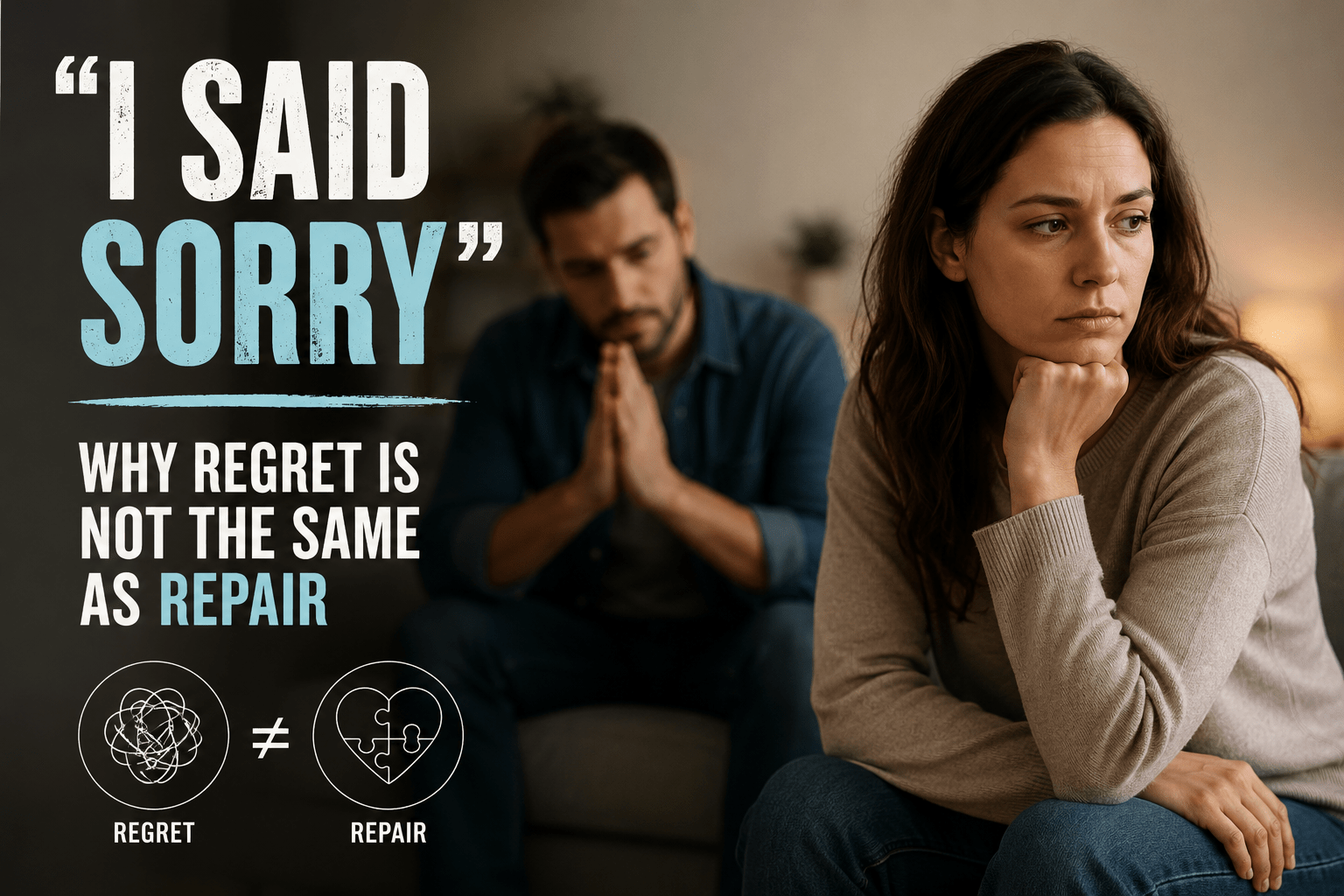
One of the most difficult truths in behaviour change work is this: Feeling bad about behaviour is not the same as changing behaviour.
And for many partners and children, repeated apologies without lasting change can become part of the harm itself.
Regret Focuses on Feelings. Repair Focuses on Impact.
Regret is often inward-focused. It sounds like:
- “I hate myself for what I did.”
- “I feel terrible.”
- “I didn’t mean it.”
- “I was stressed.”
- “I’ve been under pressure.”
- “I’m ashamed.”
These statements may be emotionally honest. But they still centre the man’s emotional experience. Repair is different. Repair asks:
- What was the impact on the other person?
- What fear, confusion, or instability did this create?
- What needs to change so this does not keep happening?
- How do I rebuild trust through consistent behaviour over time?
Real repair requires accountability, not just emotion. Real repair requires reflection on how the behaviour occurred in the first place and a learning that leads to a future change of behaviours.
Why Apologies Can Start to Lose Meaning
Many women describe hearing apologies repeatedly after incidents involving yelling, intimidation, insults, controlling behaviour, blame-shifting, emotional volatility, threats, smashing objects, silent treatment, and/or coercive behaviour
Often, the pattern looks like this:
- Harm occurs
- Feelings of remorseful
- An apology or doing something to
- Things calm down temporarily
- Tensions rise
- The behaviour happens again
Over time, the apology stops feeling reassuring because the underlying behaviour remains unchanged.
This is why some partners say: “The apology only came after the damage was done.” Or, more commonly: “He always says sorry, but nothing actually changes.”
For someone living with repeated instability or emotional harm, consistency matters more than intensity. A powerful apology followed by repeated harmful behaviour can eventually create more distrust, not less. It also devalues the apology to being just a word, not with real meaning.
Sometimes the Apology Is Also About Self-Protection
Not every apology is purely about accountability.
Sometimes apologies are used to quickly reduce consequences, discomfort, or relationship instability. A man may apologise because he wants the argument to stop, or reassurance that the relationship is okay, or some relief from guilt. He may want forgiveness quickly, to avoid being seen as abusive, and hopeful for things to “go back to normal”
This does not always mean the apology is manipulative in a calculated sense. Often it reflects emotional panic, shame, or fear of loss. But when the primary goal becomes relieving his discomfort rather than understanding her experience, the apology remains incomplete.
Repair requires staying engaged with the impact — even when that feels uncomfortable.
Why Trust Is Built Through Patterns, Not Promises
After harm occurs, many men urgently want reassurance that they are still loved, trusted, or forgiven. But trust is rarely rebuilt through words alone. Trust is rebuilt through repeated experiences of safety. That can include:
- managing anger differently
- ending blame-shifting
- respecting boundaries
- listening without defensiveness
- tolerating accountability
- becoming emotionally consistent
- following through on commitments
- accepting consequences without retaliation
- changing controlling behaviours
- engaging honestly in counselling or behaviour change work
Most importantly, repair takes time. Not because the partner is “holding onto the past,” but because nervous systems learn from patterns. If someone has repeatedly experienced fear, unpredictability, criticism, or emotional pressure, they often need sustained evidence that things are genuinely different.
“But I Already Said Sorry”
One of the frustrations practitioners often hear is: “What more does she want? I apologised.” Usually, what the partner is looking for is not a bigger apology. She is looking for behavioural change.
An apology acknowledges the event.
Repair addresses the conditions that allowed the event to happen repeatedly.
Without that deeper work, apologies can become part of a cycle:
- incident
- remorse
- reconciliation
- repetition
Breaking the cycle requires more than regret. It requires responsibility.
Repair Often Requires Looking Beneath the Incident
Men sometimes focus narrowly on the moment they lost control (the yelling, the threat, the insults, or the aggressive behaviour). But meaningful change often involves examining the broader patterns underneath. Things like:
- entitlement
- control
- emotional avoidance
- rigid beliefs about masculinity
- defensiveness
- externalising blame
- difficulty tolerating shame
- expectations of compliance
- using fear, pressure, or intimidation to manage emotions
This is why behaviour change work is rarely just about “anger management.”. He rarely has to think about managing his anger outside the home. He is able to keep himself “in check” when at work or at a social event.
The issue is often not simply anger itself, but the values and beliefs held about a relationship and what happens when anger is used to dominate, silence, pressure, or control others.
Children Learn From What Happens After Harm Too
Children do not only absorb conflict itself. They also learn from how adults respond afterward. They notice whether accountability happens, whether excuses are made, whether blame gets shifted, whether fear gets minimised, or whether behaviour genuinely changes
A child who repeatedly sees harm followed only by emotional apologies may learn that saying sorry is enough, even when patterns continue. A child who sees consistent accountability, reflection, and changed behaviour learns something very different:
That repair involves responsibility, humility, and action.
What Real Repair Can Sound Like
Repair often sounds less dramatic than regret. It may sound like:
- “I understand why you don’t trust my words yet.”
- “You should not have had to manage my emotions.”
- “I blamed you instead of taking responsibility.”
- “I need to change this pattern, not just apologise for it.”
- “I understand that change will take time to prove.”
- “I’m working on responding differently, even when I feel ashamed or defensive.”
These responses focus less on seeking immediate forgiveness and more on demonstrating accountability.
Behaviour Change Is Measured Over Time
Anyone can feel remorse immediately after causing harm. Sustained change is significantly harder. Real behaviour change is usually visible not in emotional moments of apology, but in ordinary moments of frustration, disappointment, conflict, stress, and accountability.
The real question is often not:
“Did he say sorry?”
But:
“What happens next time things get hard?”
Because repair is not proven through regret alone. It is proven through repeated, observable change over time.