Why Kindness and Gentleness Are Not Weakness in Men
There is a persistent idea many men carry, often without fully examining it: that being kind, gentle, emotionally steady, or considerate somehow makes a man less masculine.
For some, the belief is blunt:
If I’m too nice, people will walk over me.
For others it shows up more subtly:
Women say they want kindness, but they don’t respect soft men.
Or:
If I stop being hard, I’ll become weak.
This fear runs deep for many men. Not because it is true, but because it has often been taught, reinforced, and rewarded. Boys learn early that tenderness can be mocked, softness can be exploited, and emotional openness can be treated as a liability. Many grow up believing that to be safe in the world, they must be hard enough not to be hurt, detached enough not to be needy, and forceful enough not to be overlooked.
So it makes sense that some men come to associate kindness with weakness. But it is still a distortion.
Because kindness is not the absence of strength. Gentleness is not the absence of power. And a man who cannot be tender is not strong. He is often just defended.
The confusion between weakness and restraint
Part of the problem is that some men mistake aggression for strength and restraint for weakness.
But anyone can dominate a conversation. Anyone can raise their voice. Anyone can use intimidation, sarcasm, contempt, or withdrawal to gain the upper hand. Those things can create the appearance of power, but they do not necessarily reflect maturity, courage, or self-command.
In fact, it often takes far more strength for a man to remain grounded when he feels hurt, criticised, ashamed, rejected, or out of control.
To stay present without becoming punishing.
To speak clearly without becoming cruel.
To set a boundary without humiliating someone.
To remain calm without collapsing.
To hear “no” without turning it into a grievance.
To be disappointed without becoming threatening.
To be vulnerable without demanding rescue.
That is not weakness. That is capacity.
Many men have never been taught to recognise this kind of strength because it does not look dramatic. It does not announce itself. It does not need to win every moment. It is quieter than dominance, but far more solid.
Kindness is not submission
Another reason men resist kindness is because they confuse it with passivity.
They imagine a kind man as someone who never disagrees, never asserts himself, never holds boundaries, and simply gives in to keep the peace. In that version, kindness becomes appeasement. Gentleness becomes spinelessness.
But that is not genuine kindness. That is fear wearing a polite face.
Real kindness does not mean having no backbone. It means your strength is not organised around control, fear, or the need to overpower. A kind man can still be firm. A gentle man can still say no. A thoughtful man can still confront harmful behaviour. A calm man can still leave a relationship that is unhealthy. A compassionate man can still refuse manipulation.
The difference is in how he uses his strength.
He does not need to injure someone to prove he has strength. He does not need to belittle others to feel substantial. He does not need to become harder every time he feels exposed.
That is not being a pushover. That is being regulated.
Why some men fear being gentle
For many men, the rejection of gentleness is not really about values. It is about fear.
If I am gentle, will I be ignored?
If I am kind, will I lose authority?
If I am loving, will I be taken for granted?
If I am open, will I be humiliated?
If I stop controlling the room, who will I be?
Underneath the contempt some men hold for softness is often a history of pain. Perhaps gentleness was not respected in their family. Perhaps vulnerability was punished. Perhaps the men they looked up to were emotionally hard, dominating, or unreachable. Perhaps they were shamed by peers for being sensitive. Perhaps they learned that masculinity had to be performed through toughness or they would lose status.
When that happens, kindness can start to feel dangerous.
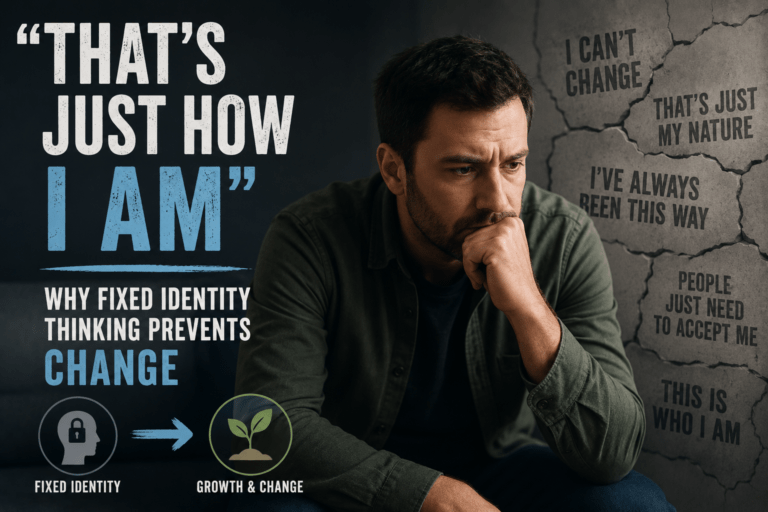
Not because kindness is weak, but because tenderness threatens an identity built on defence.
A man who has organised himself around hardness may experience gentleness as exposure. He may feel that if he softens, he will disappear. If he stops posturing, he will be ordinary. If he becomes more relational, he will somehow become lesser.
But often the opposite is true. When men no longer need to defend themselves with aggression, superiority, or emotional distance, they become more trustworthy, more mature, and more deeply themselves.
The strongest men are often the safest men
There is a version of masculinity that says a strong man is the one others fear. The one who cannot be challenged. The one who dominates. The one who always has the last word. The one who can make others back down.
But fear is a poor measure of strength.
A safer measure is this: what happens around a man when he has power?
Do people become smaller around him?
Do they go quiet?
Do they manage his moods?
Do they second-guess themselves?
Do they placate him to keep the peace?
Do they feel watched, controlled, or diminished?
Or do they feel steadier?
Do they feel able to speak honestly?
Do they feel respected, even in disagreement?
Do children relax around him?
Do partners feel free, rather than careful?
These are not small questions. They reveal the quality of a man’s strength.
A strong man is not simply one who can impose himself. A strong man is one whose presence does not require others to contract. A man who can remain connected without controlling. A man who can be powerful without being punishing. A man who can be hurt without becoming dangerous.
That is the kind of strength relationships can trust.
Kindness requires courage
Kindness is often talked about as though it is soft, easy, sentimental, or naïve. But in reality, kindness frequently asks more of a person than hardness does.
It takes courage to stay open when cynicism would be easier.
It takes courage to be fair when resentment feels justified.
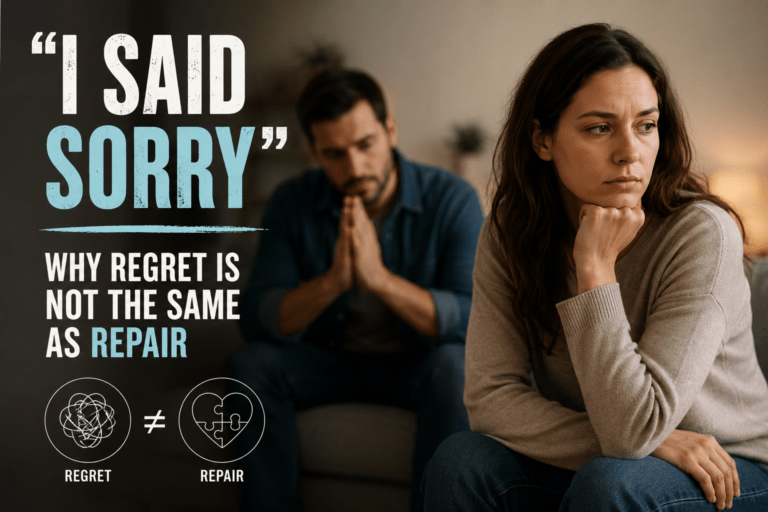
It takes courage to repair after harm rather than defend your pride.
It takes courage to admit fault.
It takes courage to offer reassurance without needing power in return.
It takes courage to be warm in a culture that rewards detachment.
Cruelty can be impulsive. Dismissiveness can be lazy. Intimidation can be reactive. Emotional shutdown can feel efficient. But kindness often requires self-reflection, patience, humility, and discipline.
This is especially true for men who have learned to equate masculinity with dominance. For them, kindness is not just a behaviour shift. It can feel like an identity shift. It means developing a different relationship to power, conflict, vulnerability, and self-worth.
That work is not weak. It is demanding.
Gentleness is not the opposite of masculinity
Some men worry that if they become gentler, they will somehow become less masculine. But that assumes masculinity is defined by emotional hardness, control, and invulnerability.
That definition has done enormous damage.
It has left many men lonely, defended, ashamed of need, frightened of tenderness, and unable to access the very qualities that create secure relationships. It has encouraged some men to confuse domination with leadership, emotional suppression with strength, and intimidation with respect.
Masculinity does not need to be built against gentleness. In fact, one of the healthiest versions of masculinity may be precisely this integration: strength with warmth, confidence with humility, steadiness with tenderness, protection without possession, authority without domination.
A man does not become less of a man by becoming more kind. He becomes less trapped inside a narrow and often brittle performance of manhood.
What a “pushover” actually is
It is worth naming this clearly: being a pushover is not the same as being kind.
A pushover is someone who cannot hold their ground. Someone who abandons themselves to avoid conflict. Someone who says yes when they mean no. Someone who confuses being liked with being safe. Someone who allows resentment to build because they do not know how to be direct.
That is not the same as gentleness. And it is not what men should be aiming for.
The alternative to aggression is not passivity. It is assertiveness with care.
A healthy man can say:
- I hear that you’re upset, and I’m open to talk through your concerns.
- I care about you, and I disagree.
- I’m willing to take responsibility for my part.
- I’m not going to control you, and I will be honest about what I need.
- I can be loving without giving up my dignity.
- I can be calm without being submissive.
This is the middle ground many men have not been shown. They often think the only options are dominance or defeat, control or collapse, hardness or humiliation. But adulthood asks for something more developed than that.
Why this matters in relationships
Many men want respect in relationships, but confuse respect with deference. They want to feel valued, but seek it through control, emotional force, or being unchallengeable. When kindness feels emasculating, it can become difficult for them to tolerate equality. They may experience a partner’s independence as disrespect, a boundary as rejection, or honest feedback as an attack on their status.
This is where things can become harmful.
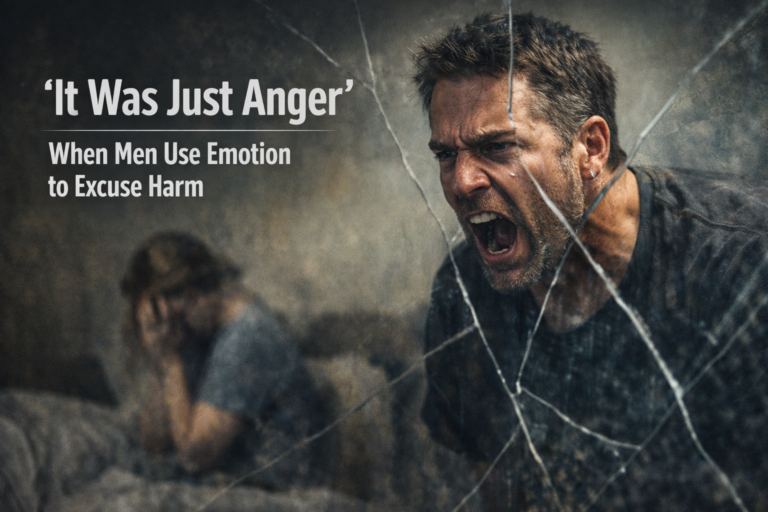
A man who believes gentleness makes him weak may cling more tightly to anger, contempt, sexual entitlement, emotional withdrawal, or coercive control because these things help him feel powerful. They help him avoid the vulnerability of mutuality. They let him maintain a version of masculinity built on never being underneath, never being uncertain, never needing too much.
But relationships cannot thrive under that kind of masculinity. They become organised around fear, emotional management, and unequal power. Intimacy gives way to control.
The men who build stronger relationships are often not the hardest men in the room. They are the men who can remain open without becoming engulfed, clear without becoming hostile, and loving without needing to dominate.
A different question for men
Instead of asking, Will kindness make me look weak? a better question might be:
What kind of man do I want to be when I have power?
Do I want people around me to feel intimidated or safe?
Do I want my children to fear my anger or trust my presence?
Do I want my partner to submit to me or feel free with me?
Do I want to be obeyed, or respected?
Do I want to be hard, or do I want to be solid?
These are not superficial image questions. They are moral questions. Relational questions. Questions about the kind of masculinity a man is building his life around.
Because in the end, the issue is not whether kindness looks masculine enough. The issue is whether a man is mature enough to stop confusing hardness with strength.
Final reflection
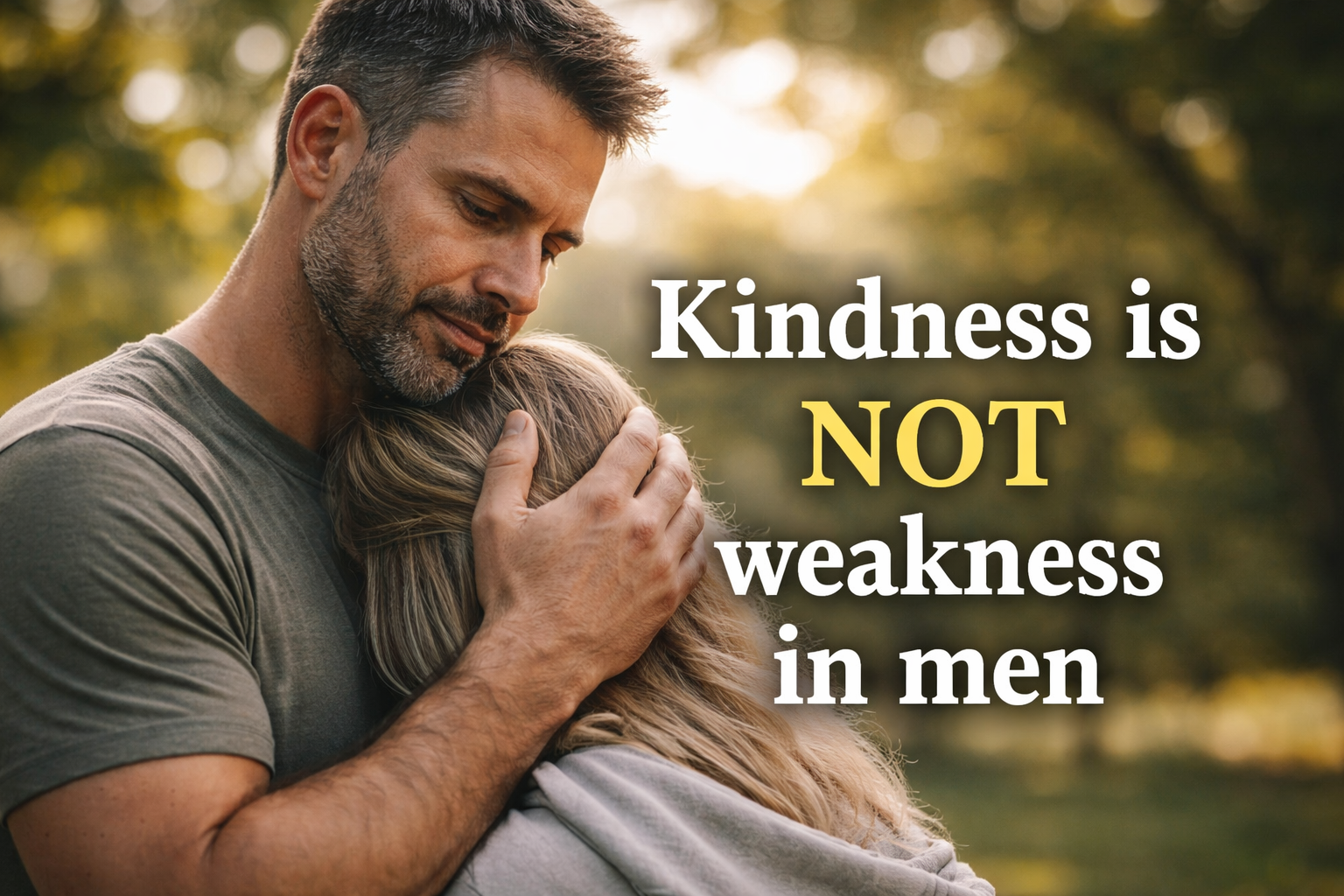
Being kind and gentle does not make a man weak. It often reveals a strength that is deeper than posturing, anger, or control.
Weakness is not tenderness. Weakness is needing domination in order to feel like a man. Weakness is collapsing into intimidation whenever vulnerability appears. Weakness is being unable to stay decent when you feel hurt, challenged, or ashamed.
A man who is kind is not necessarily naive. A man who is gentle is not necessarily passive. A man who is emotionally safe is not lesser.
He may simply be stronger than the version of masculinity that told him he had to be hard to matter.
And for many men, that is the beginning of a better life.