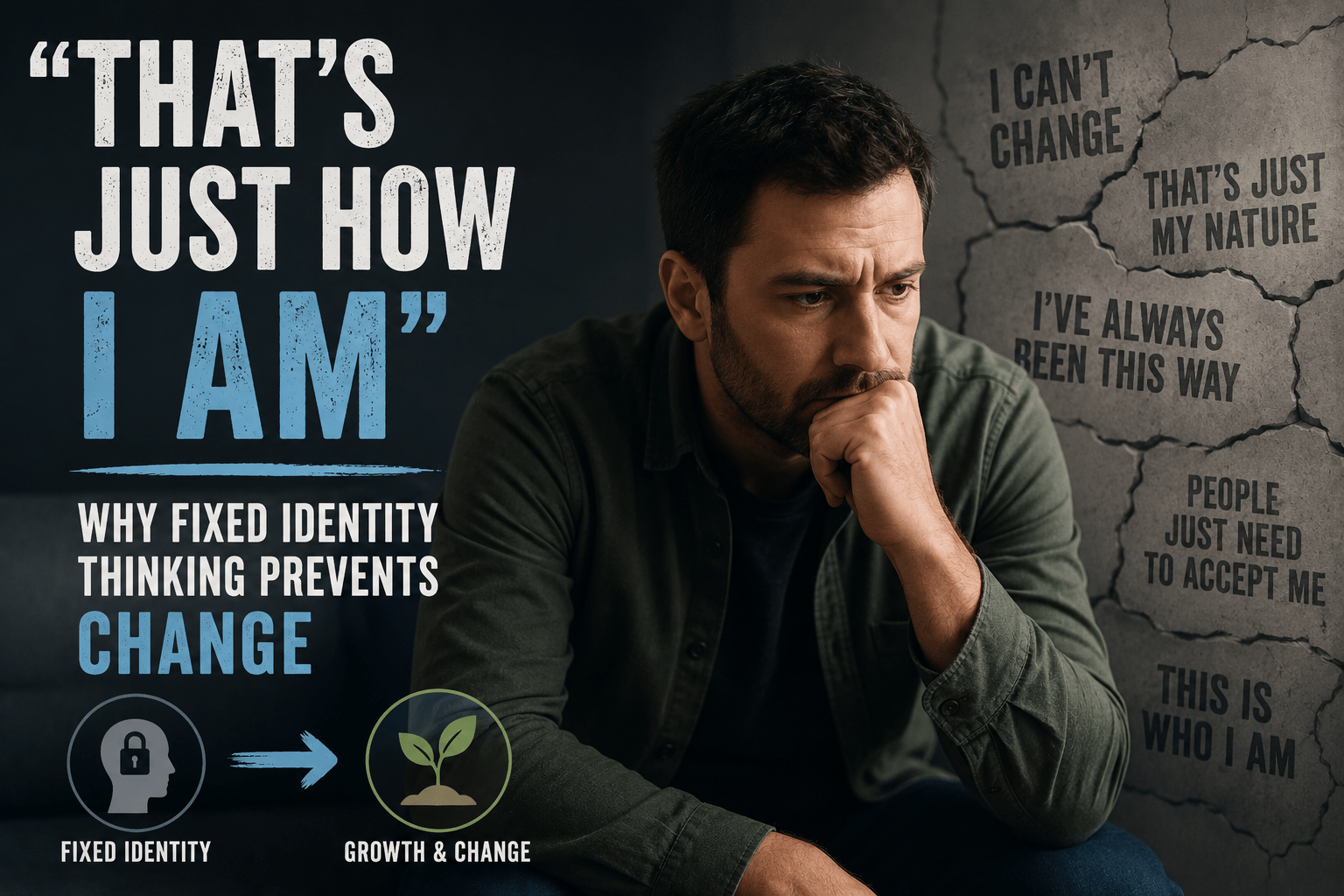
“That’s Just How I Am”: Why Fixed Identity Thinking Prevents Change
One of the most common statements heard in behaviour change work is “Maybe that’s just how I am.”. Sometimes it is said defensively, sometimes jokingly. Sometimes it is said with a sense of resignation, and sometimes as though it ends the conversation completely.
It can sound like:
- “I’ve always had a short temper.”
- “I’m just blunt.”
- “I’m naturally aggressive.”
- “I’m old-school.”
- “I’m stubborn.”
- “I just shut down when I’m angry.”
- “I can’t help it.”
- “That’s the way I was raised.”
- “People know what I’m like.”
Underneath these statements is often a deeper belief: Change is either impossible, unnatural, or unrealistic. And that belief can quietly become one of the biggest barriers to accountability and growth.
Identity Can Become a Shield Against Responsibility
When harmful behaviour is explained as personality, it can stop deeper reflection from happening. Instead of asking:
- “Why do I respond this way?”
- “What impact does this have on others?”
- “What beliefs are driving this?”
- “How could I handle this differently?”
The behaviour becomes treated as fixed, inevitable, or unchangeable. This matters because people tend to act consistently with the identity they believe they have.
If a man sees himself as:
- “just an angry person”
- “naturally controlling”
- “emotionally shut down”
- “bad at relationships”
- “the kind of guy who loses it”
then change can start to feel pointless before it even begins.
Not because change is impossible — but because the identity itself becomes protective.
“That’s Just How I Am” Often Sounds More Honest Than It Really Is
At first glance, fixed identity statements can sound truthful or self-aware. A man may say, “I’m telling you honestly who I am.”. But often these statements avoid something important:
Choice.
Human behaviour is not completely automatic or fixed. People regularly adapt their behaviour depending on who is present; workplace expectations; social consequences; authority structures; public settings; personal benefit; and/or fear of consequences
Many men who say they “can’t control themselves” at home are still capable of controlling themselves at work, in public, with friends, around police, around people they respect, and in situations where consequences feel immediate.
This does not mean emotional regulation is easy. But it does challenge the belief that behaviour is entirely uncontrollable or hardwired.
Fixed Identity Thinking Reduces Motivation to Change
If someone believes change is unrealistic, difficult conversations can start to feel threatening rather than useful. Feedback may feel like:
- rejection
- humiliation
- criticism of character
- proof they are “bad”
- attacks on masculinity
- demands to become someone else entirely
As a result, defensiveness increases. The person may minimise behaviour, justify themselves, minimise the impacts, blame others, or insist:
- “People are too sensitive.”
- “This is just my personality.”
- “Take me or leave me.”
- “I’m not going to fake who I am.”
But behaviour change is not about becoming fake. It is about becoming more responsible for the impact of our behaviour on others.
Behaviour Is Learned — Which Means It Can Also Be Relearned
Many harmful relationship behaviours are not fixed personality traits. They are patterns.
Patterns shaped by:
- family environments
- peer groups
- gender expectations
- trauma
- cultural beliefs
- emotional avoidance
- entitlement
- previous relationship dynamics
- learned communication styles
A man who grew up around yelling may normalise intimidation.
A man taught that vulnerability is weakness may default to anger or withdrawal.
A man raised to believe control equals leadership may struggle with equality in relationships.
Understanding these influences can be important. But understanding is not the same as excusing. Past learning may explain where behaviour came from.
It does not remove responsibility for changing it.
The Danger of Treating Harmful Behaviour as “Personality”
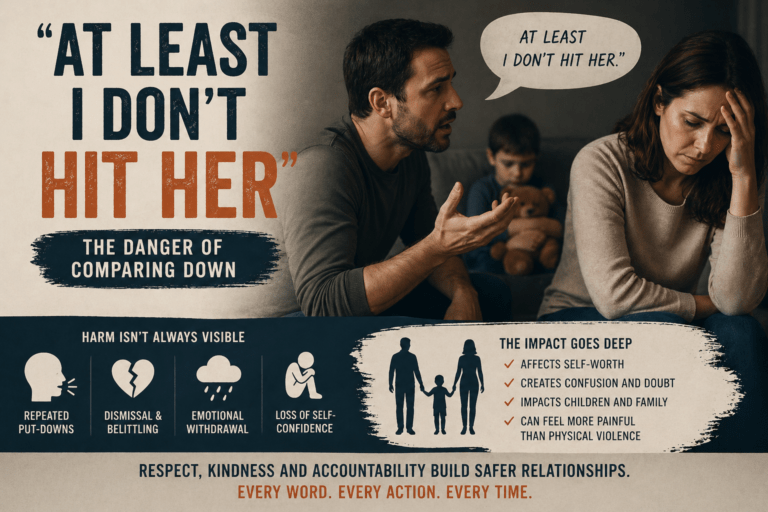
When harmful patterns become absorbed into identity, people around the man are often expected to adapt around the behaviour instead.
Partners may begin:
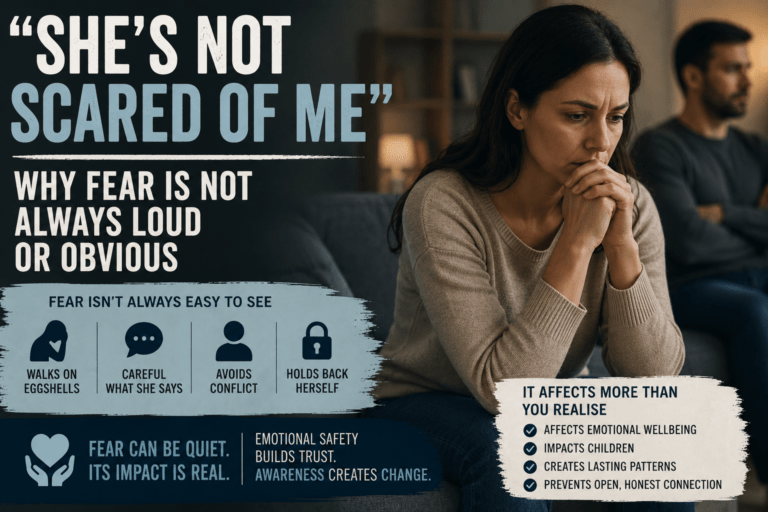
- walking on eggshells
- avoiding difficult topics
- carefully managing tone
- suppressing their needs
- monitoring his moods
- minimising conflict to prevent escalation
Children can adapt too. They may learn:
- “Dad’s just like that.”
- “Don’t upset him.”
- “Stay quiet when he’s angry.”
- “Keep the peace.”
Over time, the entire family system can reorganise itself around one person’s unmanaged behaviour. This is one reason why fixed identity thinking can become dangerous in relationships. It normalises harm as inevitable rather than changeable.
Real Change Usually Starts With Believing Change Is Possible
Behaviour change rarely begins with perfection. It usually begins with openness.
Openness to questions like:
- “Why do I react this way?”
- “What happens inside me before I become controlling or aggressive?”
- “What beliefs am I protecting?”
- “What would accountability look like here?”
- “How do I respond when I feel shame, criticism, or loss of control?”
- “What would safer behaviour actually require from me?”
These questions require humility because they challenge identity certainty.
But they also create possibility.
Growth Often Feels Uncomfortable at First
One reason people cling to “That’s just how I am” is because change can feel unfamiliar, awkward, and emotionally exposing.
Men sometimes fear that changing means becoming:
- weak
- passive
- less masculine
- controlled by others
- emotionally vulnerable
- inauthentic
But healthier behaviour is not weakness. Learning to regulate anger, tolerate accountability, communicate respectfully, or respond without intimidation often requires far more emotional discipline than aggression does.
In many cases, harmful behaviour has become familiar — not natural. And familiarity can feel falsely permanent, unchangeable or a part of who we are.
Accountability Requires a Flexible View of Self
Healthy accountability depends on believing:
- behaviour can be examined
- habits can be interrupted
- emotional responses can be managed
- beliefs can be challenged
- relationships can become safer
- different choices are possible
Without that flexibility, people often stay trapped inside old narratives about themselves.
Narratives like:
- “I’ve always been this way.”
- “People never change.”
- “I’m just damaged.”
- “This is who I am.”
But identity is not only built from past behaviour. It is also built from repeated future choices.
Change Is Not About Becoming Someone Else
Many men fear behaviour change means losing themselves entirely. But meaningful change is usually not about erasing identity. It is about removing behaviours that harm others.
A man can still be:
- direct
- strong
- assertive
- passionate
- emotionally intense
- confident
without becoming controlling, intimidating, aggressive, or emotionally unsafe.
The goal is not personality replacement. The goal is responsibility.
The Most Important Question Is Not “Who Am I?”
It is, “What do my behaviours create around me?”
Do people feel safe; respected; heard; intimidated; cautious; emotionally small; afraid of conflict; or responsible for managing your reactions?
Because behaviour matters more than self-description. And lasting change often begins the moment someone stops saying, “That’s just how I am.” and starts asking, “What kind of person do I want to keep becoming?”