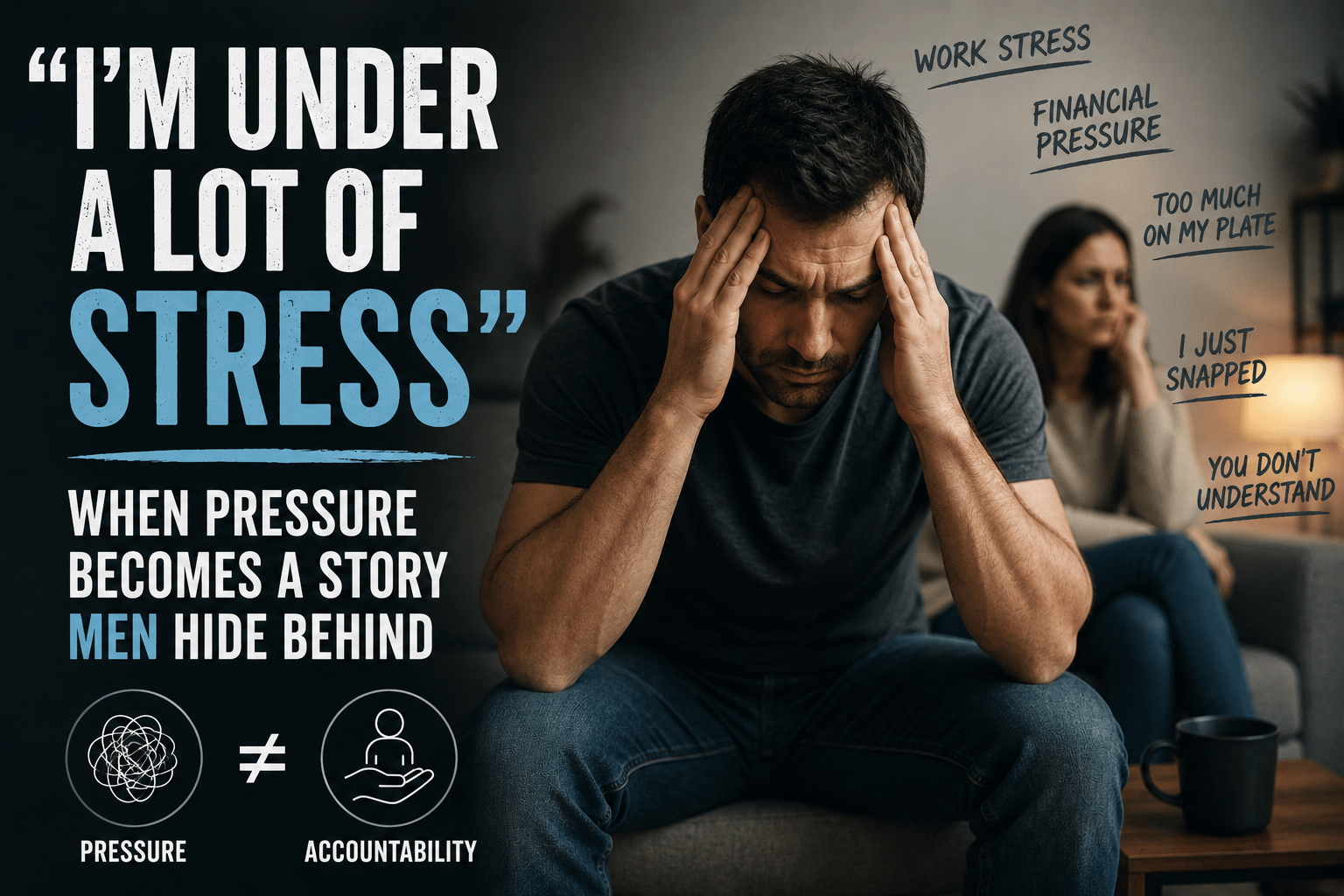
“I’m Under a Lot of Stress”: When Pressure Becomes a Story Men Hide Behind
Stress is real.
Financial pressure, relationship conflict, parenting demands, job insecurity, exhaustion, mental overload, grief, isolation, and uncertainty can affect anyone’s emotional capacity. Many men genuinely are carrying enormous pressure.
But in relationships where harm, intimidation, control, or aggression are occurring, stress can also become something else. An explanation that slowly turns into an excuse.
One of the most common justifications men give for harmful behaviour is “I’m just under a lot of stress.”. Sometimes this is said quietly and sincerely, sometimes defensively. Sometimes repeatedly after incidents involving yelling, intimidation, blame, emotional withdrawal, or aggression.
The problem is not the acknowledgment of stress. The problem is when stress becomes the entire explanation or excuse for behaviour — especially behaviour that harms other people.
Stress Does Not Automatically Create Harmful Behaviour
Stress affects mood, patience, emotional regulation, and coping capacity. That part is true. Under pressure, people may become irritable, distracted, emotionally more reactive, impatient, withdrawn, or overwhelmed
But stress alone does not determine how someone behaves toward others.
Many stressed people do not:
- intimidate their partners
- smash objects
- verbally degrade others
- threaten people
- control finances
- monitor behaviour
- blame others for their emotions
- use fear to manage conflict
Stress may increase vulnerability to reactive behaviour, but it does not remove responsibility for choices.
This distinction matters.
Because once stress becomes treated as the cause of harmful behaviour rather than a contributing factor, accountability often starts disappearing.
The Story of Stress Can Sound Very Reasonable
One reason this narrative is powerful is because it actually contains some truth. The man is stressed. He may be working long hours, struggling financially, overwhelmed, dealing with mental health difficulties, carrying unresolved trauma, feeling emotionally isolated, or even fearful about failure or loss.
These experiences deserve empathy. But empathy becomes distorted when it replaces accountability instead of sitting alongside it.
Partners often hear explanations like:
- “You know how stressed I’ve been.”
- “I’ve got too much on my plate.”
- “Anyone would react like this.”
- “You don’t understand the pressure I’m under.”
- “I just snapped.”
Over time, the conversation can shift away from the impact of the behaviour itself and toward protecting the man from criticism because he is stressed.
That shift can be dangerous.
Stress Can Become a Way to Avoid Looking More Closely
Sometimes stress explanations stop deeper reflection from happening.
Instead of asking:
- “Why do I direct my stress at other people?”
- “Why do I become controlling when overwhelmed?”
- “Why does stress turn into intimidation?”
- “Why do I expect others to absorb my emotional state?”
- “Why do I feel entitled to discharge pressure onto my family?”
the focus stays narrowly on external circumstances.
But external pressure alone does not explain why some men become emotionally unsafe while others under similar pressure do not.
Often, the issue is not just stress itself, but:
- entitlement
- emotional avoidance
- poor emotional regulation
- learned aggression
- beliefs about authority and control
- difficulty tolerating frustration
- expectations that others should absorb emotional fallout
Stress may expose these patterns, but it does not create them from nothing.
Family Members Often Carry the Cost of “His Stress”
In many homes, everyone begins organising themselves around one person’s emotional state.
Partners may:
- avoid difficult conversations
- minimise their needs
- carefully manage tone
- suppress emotions
- monitor his mood constantly
- try to “keep things calm”
Children notice this too.
They learn:
- “Dad’s stressed — don’t upset him.”
- “Be quiet when he gets home.”
- “Don’t ask for too much.”
- “Stay out of the way.”
Over time, stress becomes something the entire household is expected to manage around. But relationships cannot become emotionally safe if one person’s stress consistently overrides everyone else’s emotional wellbeing.
Stress Often Reveals Existing Beliefs About Responsibility
Stressful moments tend to expose underlying beliefs people already hold.
For example: A man who believes, “People should leave me alone when I’m stressed” may justify emotional withdrawal or hostility.
A man who believes, “I shouldn’t be questioned when I’m overwhelmed” may respond aggressively to accountability.
A man who believes, “My stress matters more than everyone else’s” may expect others to absorb his emotional reactions without challenge.
This is why behaviour change work often focuses not only on stress management, but on values and beliefs about entitlement, emotional responsibility, and control.
“I Just Snapped” Usually Ignores What Happened Before
Many men describe incidents as though the behaviour appeared suddenly and uncontrollably. But harmful behaviour is often preceded by smaller choices and escalating patterns, including:
- refusing to communicate openly
- bottling emotions
- avoiding vulnerability
- blaming others internally
- building resentment
- monitoring perceived disrespect
- escalating tone
- using intimidation to regain control
The final explosion may feel sudden but the pattern leading toward it often develops over time. Understanding that pattern matters because it creates opportunities for interruption and change.
Healthy Stress Does Not Require Other People to Feel Unsafe
Stress is unavoidable. It is a part of life. Every person experiences periods of overload, frustration, exhaustion, or emotional strain. The real question is not whether stress exists.
It is:
“What happens to the people around me when I’m stressed?”
Do they experience:
- fear?
- unpredictability?
- emotional withdrawal?
- criticism?
- intimidation?
- blame?
- pressure?
- silence?
- instability?
Or do they still experience respect and emotional safety, even during difficult periods?
That distinction matters far more than whether someone feels stressed.
Men Often Receive Mixed Messages About Stress and Masculinity
Many men are taught conflicting expectations:
- provide financially
- stay emotionally strong
- suppress vulnerability
- never appear weak
- handle pressure alone
- stay in control at all times
Under those conditions, stress can build silently until it leaks out through anger, control, withdrawal, or aggression. Some men only feel emotionally permitted to express distress through irritability or anger because vulnerability feels unsafe or shameful.
But unexpressed vulnerability does not disappear. It often re-emerges in ways that affect the people closest to them. This is why emotional literacy and accountability are deeply connected.
A man who cannot recognise, express, or regulate emotional pressure safely is more likely to discharge it onto others.
Accountability Means Owning the Impact of Stress
Real accountability sounds different from excuse-making.
It sounds like:
- “I’ve been under pressure, but that does not excuse how I treated you.”
- “My stress is mine to manage.”
- “You should not have to walk on eggshells because I’m overwhelmed.”
- “I need better ways to respond when I feel pressure building.”
- “I’ve been using stress to justify behaviour I need to change.”
These responses do not deny stress. They place responsibility alongside it.
Pressure Can Explain Struggle Without Excusing Harm
There is nothing weak about acknowledging stress. In fact, many men need more support, emotional honesty, and healthier coping strategies. But stress becomes dangerous when it turns into a permanent shield against accountability.
Because eventually the question is no longer:
“Is he stressed?”
It becomes:
“What happens to other people when he is?”
And healthy relationships require an answer that does not leave partners or children carrying the emotional cost of one person’s unmanaged pressure.