“At Least I Don’t Hit Her”: The Danger of Comparing Down
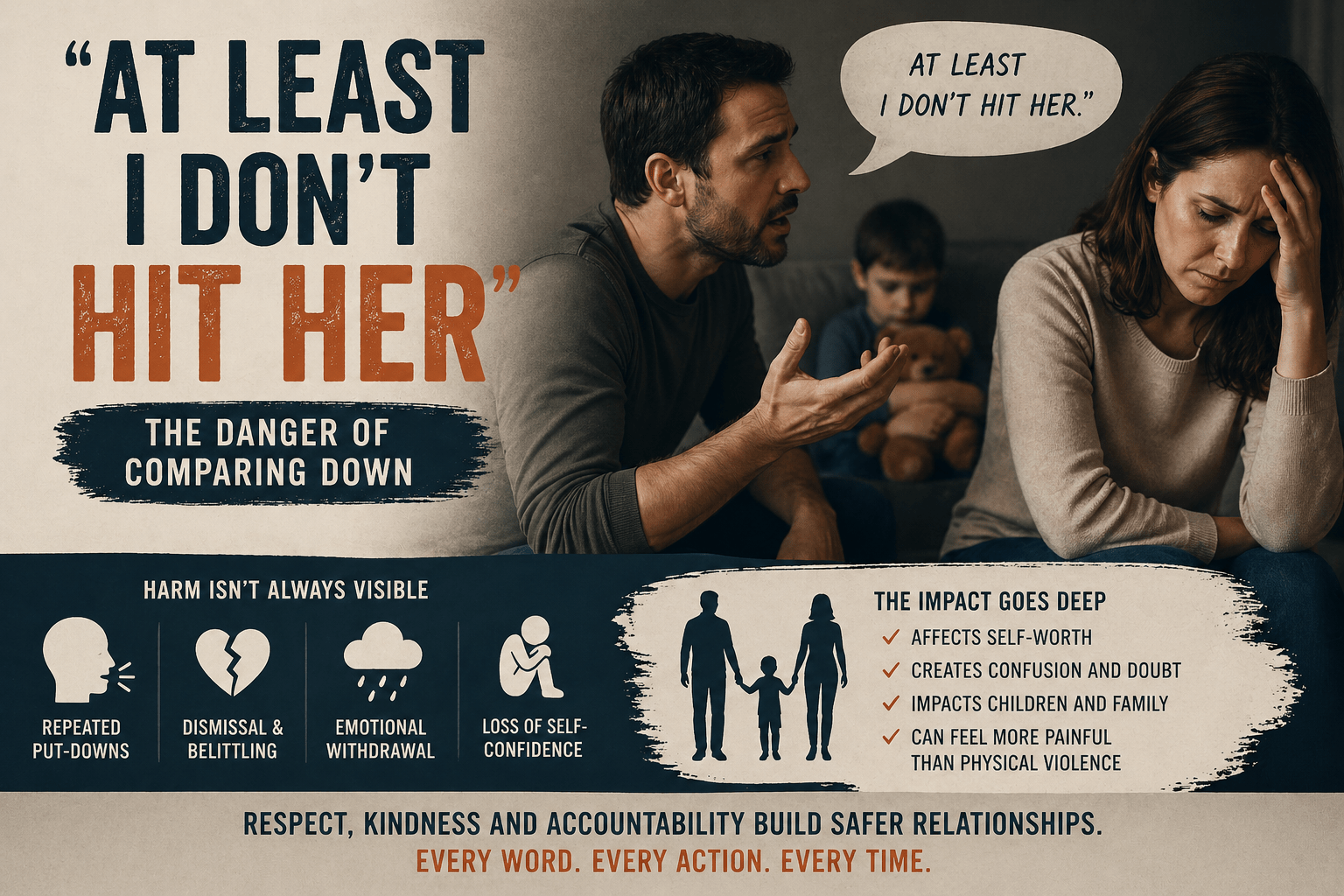
“At least I don’t hit her.”
It’s often said as a line of defence. A way to draw a boundary between “real” violence and everything else. For many men, it feels like a reasonable statement—evidence that whatever is happening in the relationship, it’s not that bad.
But this comparison does something subtle and dangerous.
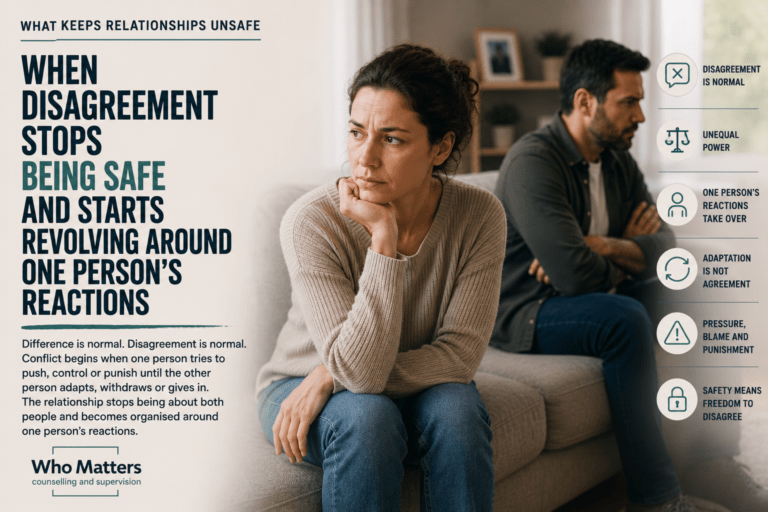
It sets the bar for acceptable behaviour at the point of physical assault—and then treats everything below that line as tolerable, insignificant, or not worth examining.
In reality, much of the harm that occurs in relationships happens well above that line—and often goes unnamed because of it.
The Logic of “Comparing Down”
Comparing down is a psychological strategy. It works like this: “I’m not as bad as that, so what I’m doing isn’t a problem.”
It creates distance from the most extreme examples of abuse:
- Physical violence
- Criminal behaviour
- Highly visible harm
And in doing so, it avoids looking closely at behaviours that may still be causing significant damage:
- Repeated put-downs
- Sarcasm used to belittle
- Public embarrassment
- Dismissal of thoughts or feelings
- Withholding affection or approval
- Undermining confidence over time
Because these behaviours don’t leave bruises, they’re easier to minimise. But their impact accumulates.
The Invisible Weight of Put-Downs
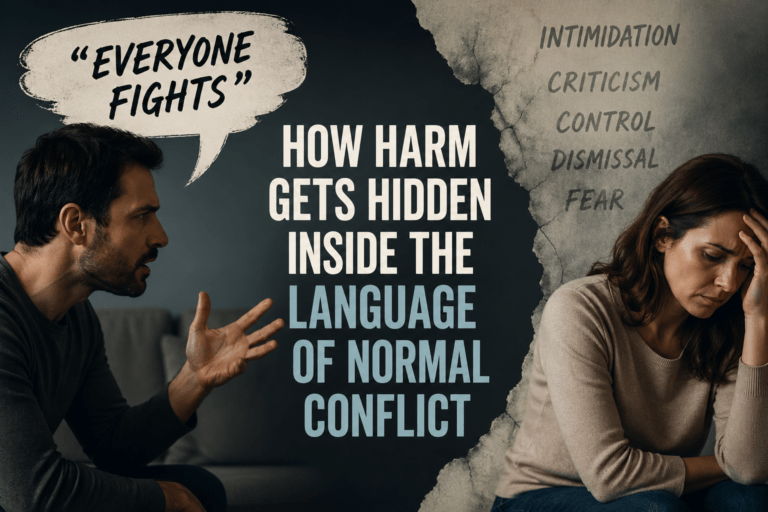
One of the most overlooked forms of harm in relationships is the repetition of seemingly “small” comments. A single critical remark might not seem significant but over time, repeated put-downs begin to shape how a person sees themselves.
They can sound like:
- “You’re overreacting.”
- “You’re too sensitive.”
- “You can’t take a joke.”
- “I was just being honest.”
- “No one else would put up with you.”
Individually, these statements may be dismissed. Collectively, they create an environment where the other person:
- Questions their own perception
- Second-guesses their reactions
- Feels consistently “less than”
- Becomes more cautious, withdrawn, or anxious
This isn’t just conflict—it’s erosion.
“I Wish He Would Have Hit Me”
Many partners describe a difficult-to-articulate experience: “I almost wish he would have hit me—because then I’d have something tangible to point to.” This isn’t a desire for violence. It’s an expression of how confusing and disorienting non-physical harm can be.
Physical violence is clearly recognised. It’s named. It’s validated socially and legally.
But ongoing emotional harm often exists in a grey area:
- It’s harder to explain
- Easier to dismiss
- More likely to be minimised by others—and by the person experiencing it
Without something concrete, the affected partner can start to doubt themselves:
- “Maybe I’m making too much of it.”
- “Maybe this is just what relationships are like.”
That uncertainty can be as damaging as the behaviour itself.
The Impact on Children and Family Members
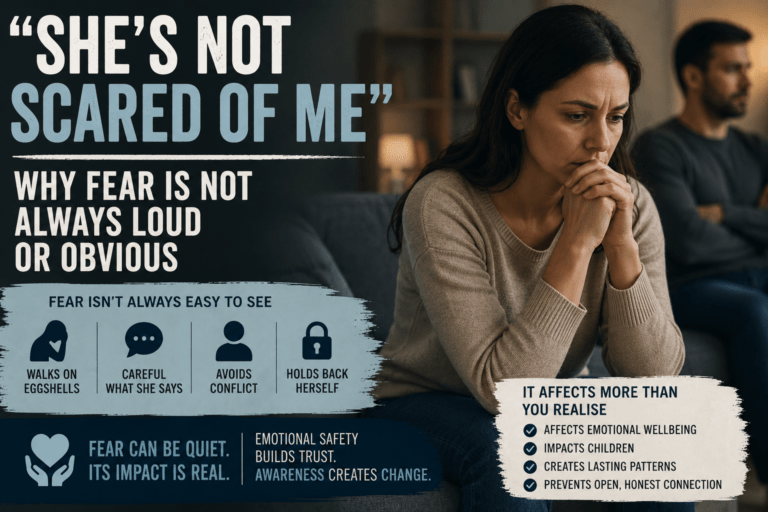
Repeated put-downs and dismissive communication don’t just affect one person—they shape the entire relational environment. Children, in particular, are highly attuned to tone, tension, and patterns.
Even if they don’t fully understand the words, they absorb:
- Who holds power
- How conflict is handled
- What respect looks like
- Whether it’s safe to speak up
When one parent consistently belittles or undermines the other, children may:
- Internalise similar beliefs about themselves
- Learn to normalise disrespect
- Align with the more dominant parent out of self-protection
- Become anxious, withdrawn, or hyper-aware of conflict
Over time, this can influence how they form relationships themselves—either repeating the pattern or struggling to trust and feel secure.
Why “Not Hitting” Isn’t the Benchmark
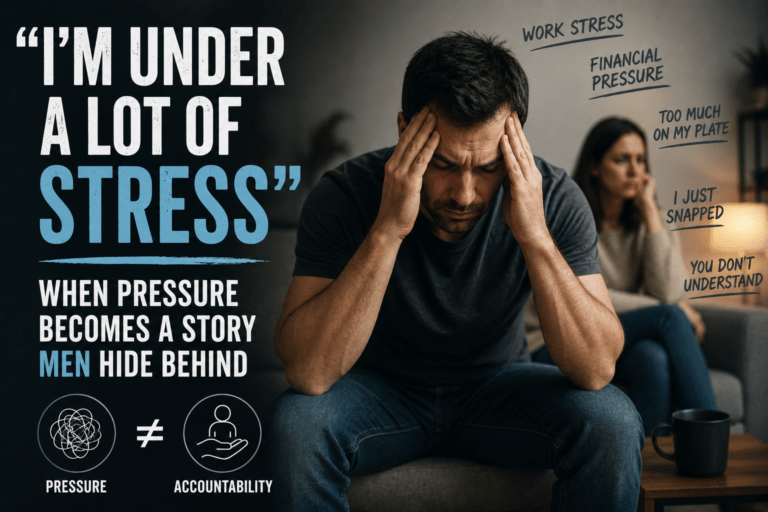
Not hitting someone is a baseline legal and moral expectation—not a measure of relational health.
Using it as the primary standard creates a distorted scale:
- It ignores emotional and psychological impact
- It allows harmful patterns to continue unchallenged
- It keeps the focus on what you don’t do, rather than what you do
A healthier benchmark asks different questions:
- Do I speak in ways that build or diminish?
- Do I take responsibility for the impact of my words?
- Do the people around me feel safe, respected, and valued?
The Subtlety of Harm—and the Need for Precision
One of the reasons these dynamics persist is because they are easy to mislabel.
They get called:
- “Just joking”
- “Just being honest”
- “Just sharing how I feel”
- “Just a bad mood”
- “Just how I communicate”
Language matters. When harmful behaviour is softened by vague or minimising terms, it becomes harder to see—and harder to change.
Clarity is what allows accountability.
Moving Away from Comparison
Letting go of “at least I don’t hit her” requires a shift in focus:
From:
“How do I compare to the worst examples?”
To:
“What is the impact of my behaviour on the people closest to me?”
That shift can feel confronting. It removes the buffer of comparison and replaces it with direct responsibility. It shifts the focus on other’s behaviours to your behaviours, and the impacts they have on your family.
But it’s also where meaningful change begins.
Final Reflection
You don’t need to be the worst version of harm for your behaviour to matter. And the absence of physical violence doesn’t equal the presence of safety.
If the people around you feel diminished, uncertain, or consistently on edge, something important is happening—whether it fits a clear label or not.
Moving forward starts with being willing to see it clearly.
Not in comparison to others, but on its own terms.